


There is another world beyond the shores of Tsara Komba. It is shaped by shifting light, intricate coral gardens and the gentle movement of the Indian Ocean. Beneath the surface, sunlight filters through clear blue water and life appears in every direction, from clouds of colourful reef fish to sea turtles gliding over the coral. With experienced instructors leading the way, all that remains is to step from the boat, and descend into the blue.

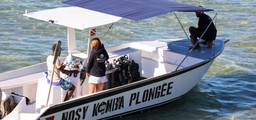
Set within the Nosy Be archipelago, Tsara Komba offers access to an extraordinary variety of dive sites, each with its own character.
Diving is arranged through Nosy Komba Plongée, whose PADI- and CMAS-certified instructors have explored these waters for more than 20 years. Guests are collected directly from the beach below the lodge following which experienced instructors assess the conditions and each diver’s experience before choosing the sites best suited to the day. PADI or CMAS certification is required.
Around 20 regular dive sites are used for morning trips in the Nosy Be and Nosy Komba region, many reached within just 20 to 25 minutes by boat. Among the best known are Nosy Tanikely, Shark Point, Manta Point, Roland Point, Abyss and Les Arches, each revealing a different character through coral gardens, drop-offs, canyons and deeper waters. For longer journeys, the boat ride becomes part of the adventure, with dolphins, seabirds and fisherman in traditional boats keeping you company along the way.

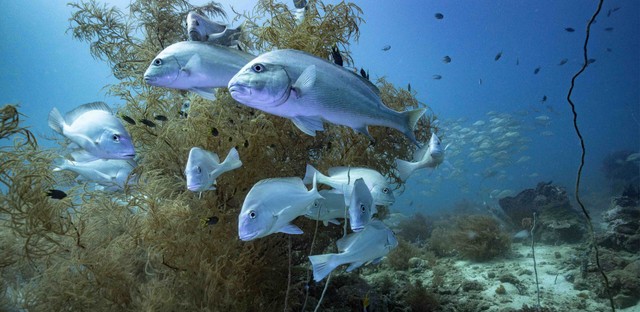
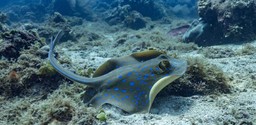
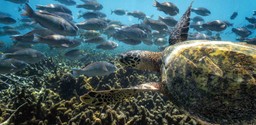
The reefs of north-western Madagascar are wonderfully rich in marine life. Tropical fish move between corals and giant gorgonians, while green and hawksbill turtles share the water with guitar rays, eagle rays, stingrays, torpedo rays, reef sharks and large pelagic fish. Grey sharks, leopard sharks and dolphins may also be seen throughout the year, although every encounter remains shaped by the conditions, the site and the creatures that happen to pass through.

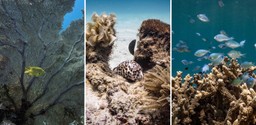
Some of the most fascinating underwater discoveries just happen to be the smallest.
Nudibranchs, ghost pipefish, frogfish, dragonets and shrimp hide among soft corals and sponges, transforming the reef into a treasure hunt for patient divers. The longer you look, the more the underwater landscape reveals, from tiny flickers of movement to unexpected shapes and flashes of colour hidden in plain sight.
The main diving season runs from August until the end of November, but visibility does not follow a simple calendar and is influenced by weather, tides, currents and local water movement. Humpback whales pass through mainly from July to September, while early October to early December brings the best possibility of encountering whale sharks. Mobulas are most common in October and November, and although manta rays are possible during these months, they remain a chance sighting rather than a certainty.
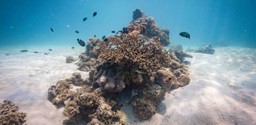
A typical day begins at around 8:15 am, setting out across the Indian Ocean as Nosy Komba recedes behind you and the promise of the first descent lies ahead. Two different sites are explored during the morning, with an hour between dives to resurface into the sunshine, enjoy tea, coffee, fruit and beignets on the boat, and journey towards the next stretch of reef. The boat generally returns between midday and 2 pm, depending on the sites and conditions.
For those wanting to venture further, full-day expeditions can explore at least ten sites around Nosy Iranja or more than ten in the southern Nosy Mitsio area. These journeys run from morning until late afternoon, with a picnic included and more time to discover some of the archipelago’s remote reaches.
By the time the boat returns, there is still an afternoon on the island to enjoy, perhaps over a long lunch beside the water, a swim from the beach or a few unhurried hours beneath the trees. The world below may still call to you, filled with unfamiliar shapes, colours and encounters, but for now, you can rest in the wonderful knowledge that an entire wilderness continues beyond the shore, ready to be explored again tomorrow morning.
Book your sustainable adventure with us
travel@timeandtideafrica.com
- Share:


