




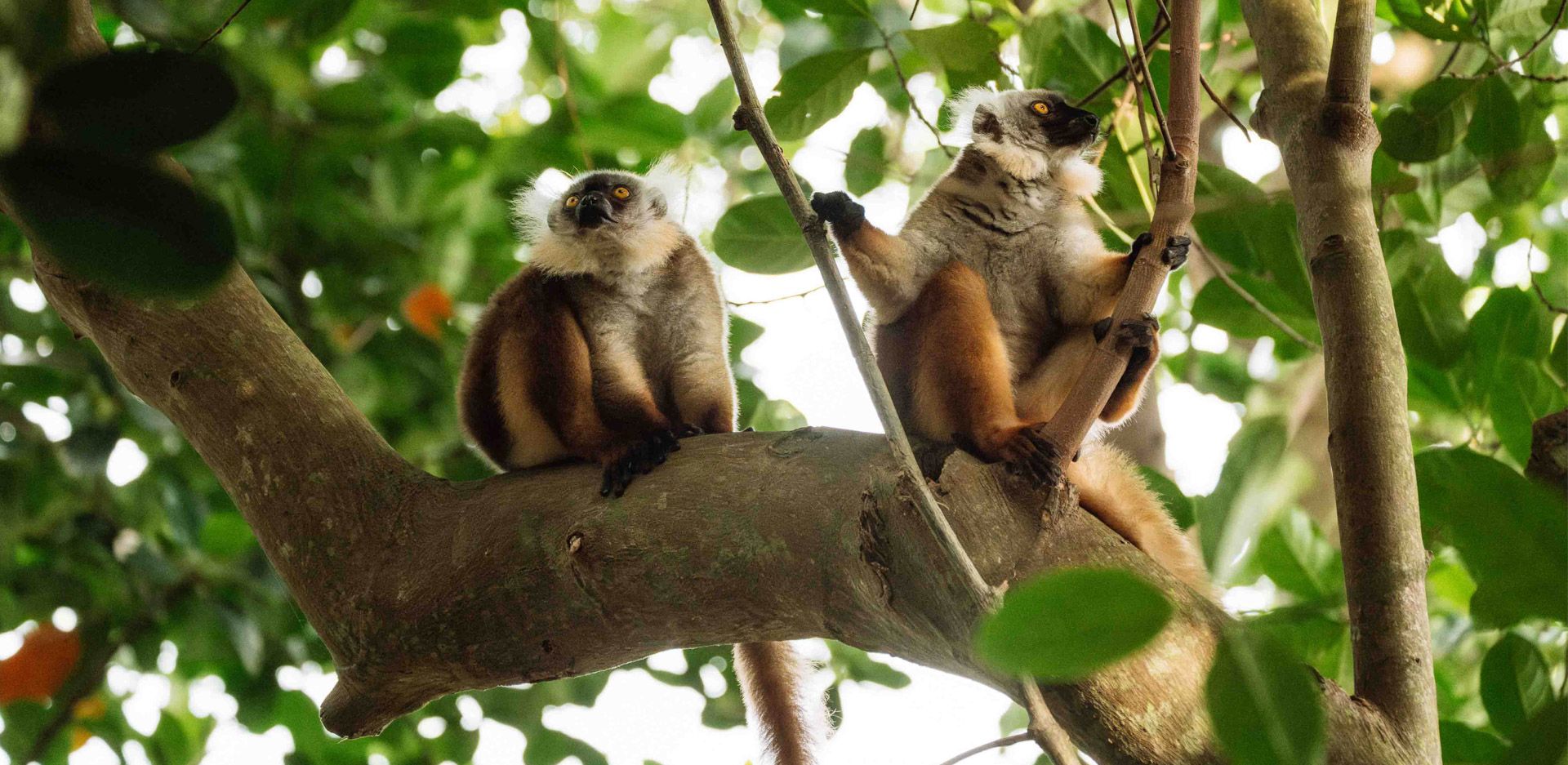
With bright orange eyes, long bushy tails and a talent for leaping between the treetops, the black lemurs of Nosy Komba have made quite a name for themselves. So much so, in fact, that they’ve helped give the island a new name. Originally known as Nosy Ambariovato, meaning ‘the island surrounded by rocks’, it is now far better known as Nosy Komba, with komba referring to lemurs in the local Sakalava language. It’s a fitting name for an island where these curious creatures have become such an important part of its natural heritage.

Madagascar is the only place in the world where lemurs occur naturally in the wild.
Having evolved in isolation for millions of years, these remarkable primates have developed into more than 100 recognised species, ranging from the tiny mouse lemur, which is no bigger than the palm of your hand, to the indri, the largest living lemur, whose haunting calls carry through the rainforest for kilometres. Each species has adapted to its own environment, from the dry forests of the south to the tropical rainforests of the east.

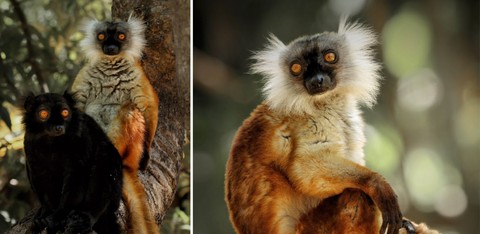
On Nosy Komba, it is the black lemur (Eulemur macaco) that has made itself at home. Found naturally in northwestern Madagascar and on a handful of neighbouring islands, this species is particularly fascinating because males and females look remarkably different. Males have thick, almost entirely black fur, while females are a beautiful reddish-chestnut colour, with distinctive white tufts framing their faces. Both have striking orange eyes and long tails that help them balance as they move through the forest canopy.
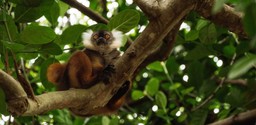
Black lemurs are highly social animals, typically living in groups of between two and fifteen individuals, with females generally taking the lead. As is the case with many lemur species, females are dominant, often getting first choice of food and asserting their authority over males. Their diet consists primarily of fruit, supplemented by flowers, leaves and nectar depending on the season. They communicate through a variety of calls, facial expressions and scent markings, while grooming helps strengthen relationships within the group. Unlike many other primates, black lemurs can be active during both the day and night, often resting during the hottest hours.
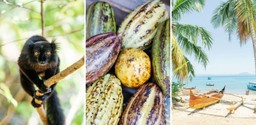
The relationship between lemurs and people runs deeper than their shared surroundings.
In Sakalava culture, which has a strong presence in northwestern Madagascar, respect for ancestors is an important part of traditional life. Across Madagascar, certain beliefs hold that ancestral spirits may return in the form of lemurs, giving these animals a special spiritual significance. On Nosy Komba, black lemurs are traditionally considered sacred and protected by fady, which is the local customs and taboos that discourage harming them. These beliefs have helped shape the close relationship between the island’s communities and its most recognisable wildlife.
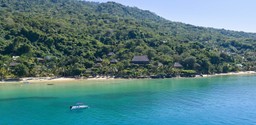
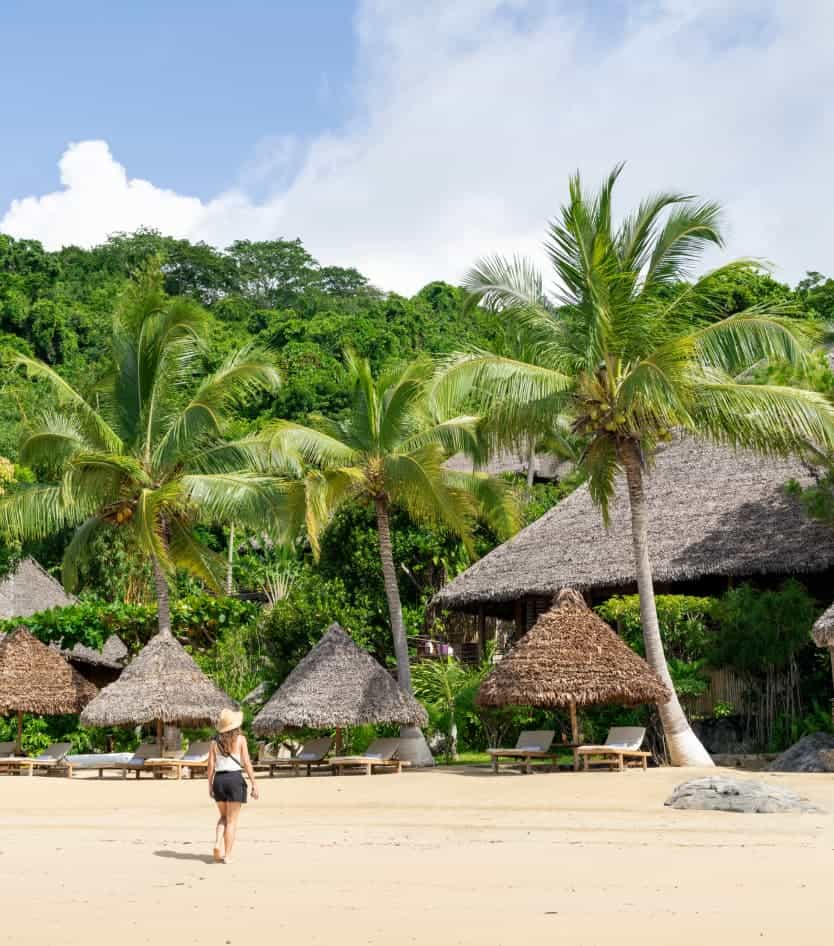
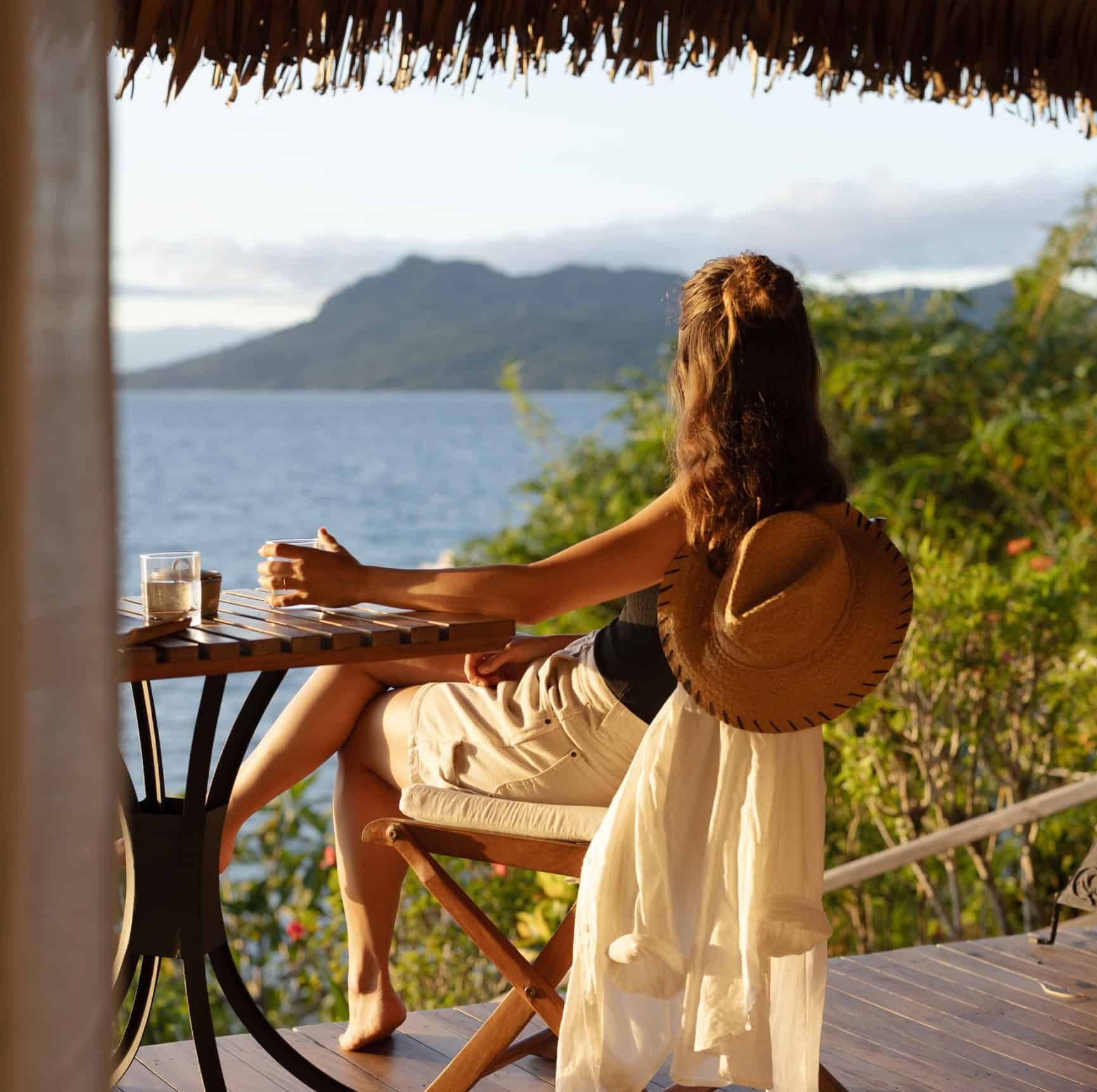
For guests staying at Tsara Komba, meeting these charismatic neighbours is often just a short walk away. A ten-minute stroll along the beach leads to the neighbouring village, where black lemurs are frequently spotted moving through the surrounding trees. Guests can explore independently or join a member of our Activities Team, who can share more about the island and its wildlife along the way. Passing through the village provides a lovely glimpse into everyday life on Nosy Komba, with fishermen tending to their boats, children playing and local families going about their daily activities.
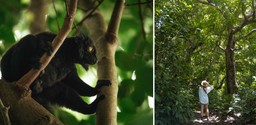
For those keen to venture further, longer walks across the island lead through tropical vegetation, hillside plantations and small settlements. Near the village on the opposite side, black lemurs are sometimes encountered along the pathways, offering another opportunity to observe them in their natural surroundings.
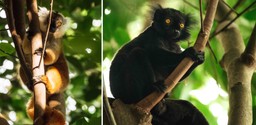
Today, black lemurs are classified as Endangered, with habitat loss and hunting among the greatest threats to their survival. Their presence on Nosy Komba is an important reminder of the value of protecting Madagascar’s extraordinary biodiversity and the habitats these animals depend on.
As black lemurs face an uncertain future elsewhere in Madagascar, their continued presence on Nosy Komba is particularly precious. Protecting the island’s forests, respecting its wildlife and preserving the traditions that have long connected people to nature will help ensure that Lemur Island lives up to its name for years to come.
Book your sustainable adventure with us
travel@timeandtideafrica.com
- Share: